Product Description
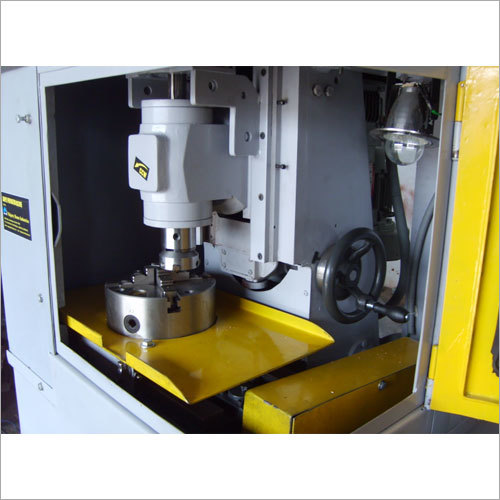
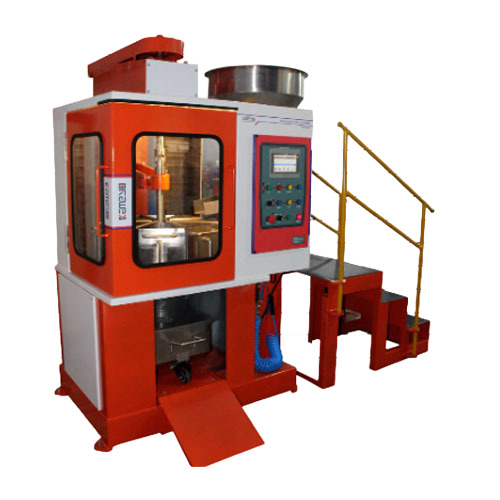
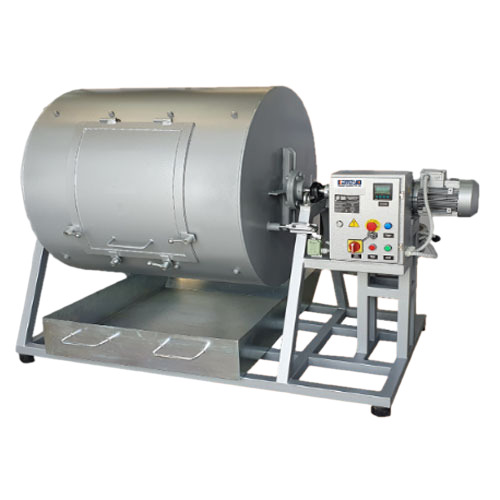
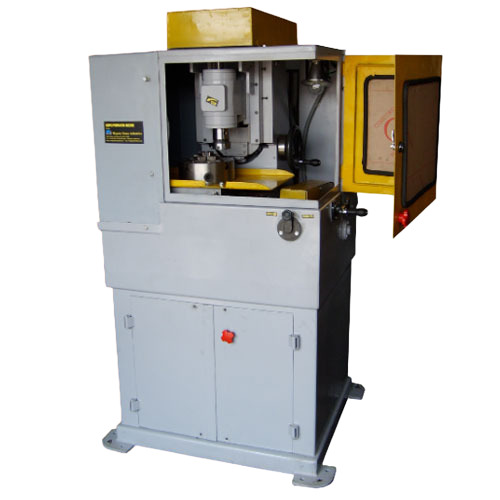
We are one of the leading manufacturers, suppliers, and exporters of Laboratory Mill. This offered machine is widely used for fast milling of non-ferrous samples with a reproducible surface for X-ray spectrometer and emission analysis. It is constructed using various grades raw material and tested various parameters to ensure the quality as well as the safety of the product. Laboratory Mill is used for grinding & milling various dry and wet materials in the pharmaceutical, chemical or herbal industries. It is available in standard as well as customized specifications and sizes.
Features:- High strength
- Longer working life
- Sturdy design
Product details
| Cutter Dia | 63 mm |
| Usage/Application | For facing the ferrous & Non-Ferrous material samples for spectrographic analysis |
| Power | 440V AC, 4 pole, 6 Amps MCB (3 Phase with Neutral + Earthing) |
| Main Motor | 3 HP, 3 Phase 415 V |
| Speed | 400 to 2880 rpm |
| Brand | Kameyo |
| Material | Mild Steel |
| Max Round | 80 mm |
| Max Height | 60 mm |
| Max Edge | 50 x 80 mm |
Advanced Grinding PerformanceEquipped with a rotor beater grinding mechanism and a chamber constructed from high-grade steel, this laboratory mill delivers exceptional particle reduction and uniform samples. The variable speed control allows users to tailor grinding performance to specific materials, ensuring repeatable results for laboratory research, quality control, and sample analysis.
Safety and Ease of OperationThe Laboratory Mill prioritizes user safety with its overload protection and safety interlock features, effectively preventing incidents during operation. Its digital controls and display enable straightforward adjustment and monitoring, while the compact rectangular design and low noise operation make it an ergonomic choice for busy laboratory environments.
Durability and VersatilityBuilt using stainless and mild steel, the mill withstands rigorous daily use and resists corrosion. With a temperature resistance up to 150C, it accommodates a variety of applications, including grinding, sample preparation, and materials testing across industries. Its bench-top mounting and 2-liter capacity make it suitable for laboratories with limited space.
FAQs of Laboratory Mill:
Q: How does the Laboratory Mill achieve precise particle size reduction?
A: The mill utilizes a rotor beater type grinding mechanism within a high-grade steel chamber. Its variable speed control (10003000 RPM) enables users to adjust the grind according to sample requirements, achieving fineness up to 60 mesh for accurate laboratory analysis.
Q: What safety features are included with this Laboratory Mill?
A: This equipment is fitted with overload protection and a safety interlock. These features prevent damage to the machine and ensure the operators safety by shutting down or restricting operation in case of unsafe conditions.
Q: When is the Laboratory Mill ideal for use in laboratory settings?
A: The mill is best suited for tasks involving sample preparation, materials testing, and grinding, especially when consistent particle size and safety are required. Its durable construction and temperature resistance make it reliable for daily laboratory use.
Q: Where can this Laboratory Mill be installed in a laboratory?
A: With its bench-top mounting type and compact design (dimensions: 550 x 300 x 400 mm), the mill is intended for installation on laboratory workbenches, optimizing space utilization in both small and large labs.
Q: What is the process for operating the Laboratory Mill?
A: Operation involves loading materials (up to 12 mm feed size) into the chamber, setting the desired rotor speed and fineness using the digital control and display, then activating the unit. Safety interlocks and overload protection automatically monitor performance during use.
Q: How does the Laboratory Mill benefit laboratory grinding applications?
A: This mill offers precise control, low noise (<65 dB), and high sample output (50150 g/min), improving efficiency and repeatability of results. Its durable construction and ease of operation minimize maintenance and training requirements.





 Send Inquiry




 English
 Spanish
 French
 German
 Italian
 Chinese (Simplified)
 Japanese
 Korean
 Arabic
 Portuguese